Integrated ATPL, Modular Training, and Credit Transfers: What the Structural Differences Actually Mean for Your Career
Choosing between an integrated ATPL programme, a modular route, and an ATPL credit transfer isn’t really a financial decision. It’s a decision about which structure gives you the best chance of arriving at a First Officer interview with a clean, consistent training record and the skills to back it up.
Key Takeaways
- Integrated ATPL training takes a student from zero flying experience to a frozen ATPL within a single, continuously managed syllabus under one EASA-approved organisation.
- Modular training places the entire coordination burden on the candidate, which creates scheduling gaps, inconsistent preparation across providers, and real risk of skill degradation between phases.
- ATPL credit transfers are a regulatory conversion mechanism for pilots holding non-EASA licences. They’re not a shortcut for someone starting from scratch.
- There are 13 ATPL theory exams. The number doesn’t change between integrated and modular routes. What changes is how you prepare for them.
- Switzerland’s training environment at Locarno Airport delivers more than 320 flyable days per year, which directly affects how consistently practical phases progress.
What Are You Actually Comparing?
Most conversations about training routes start with price. That’s understandable. It’s also the wrong starting point.
The correct frame is: what does each path reliably produce at the end, and what goes wrong if the structure fails mid-training? Those are different questions, and most candidates only think about the second one after they’ve already committed.
An integrated ATPL course is a single, continuous programme where theory, flight training, simulator sessions, and examinations are designed and sequenced together under one syllabus at one approved training organisation. The academy coordinates every phase. You progress through a structure that’s already been designed to get you to the end.
Modular training inverts that arrangement. You hold a PPL, then book each subsequent phase separately, often with different providers, and manage the gaps between them yourself. The per-phase cost can look attractive on a spreadsheet. The coordination burden is entirely yours.
ATPL credit transfers belong in a separate category. They’re not a training route for someone beginning from zero. They’re a regulatory process for pilots who already hold a valid licence from outside the EASA system and want European recognition. If you’re at the early stages of your training research, this option isn’t relevant to your situation yet.
Understanding how airline pilot training structure shapes your career trajectory is worth doing before you settle on a route.
Why Do Candidates Underestimate the Modular Route?
The modular path is genuinely appealing when you’re looking at individual phase costs. A PPL is accessible. Hour-building can stretch across time. The financial commitment feels more manageable when it arrives in smaller pieces.
What that initial comparison tends to obscure is the coordination problem. In a modular route, you’re responsible for sourcing your own simulator slots, selecting providers for each rating with no guaranteed syllabus continuity between them, and managing whatever gaps appear between phases.
Here’s the specific failure mode that plays out repeatedly: a candidate completes their PPL, then waits several months before their hour-building phase can begin because their chosen school has limited availability. Flight skills built during early training need consistent reinforcement to consolidate properly. A significant gap doesn’t just delay your timeline. It can mean arriving at the next phase operating below the standard required, needing additional instruction before you can progress. The per-phase cost advantage starts to erode once rebooking fees, extra instruction hours, and resit costs are added in.
That’s not a theoretical risk. It’s the predictable consequence of a structure where no single organisation holds responsibility for continuity.
The point isn’t that modular training never produces capable pilots. It’s that every coordination risk falls on the candidate. Airlines recruiting First Officers also look at training records. A consistent record from a single ATO reads differently at an assessment centre than a collection of certificates from multiple providers spread across several years. That’s not disqualifying, but it’s a variable you carry that an integrated graduate doesn’t.
What Does Integrated ATPL Training at AELO Actually Deliver?
An integrated ATPL programme runs from zero flying experience to a frozen ATPL within a single, continuously managed syllabus. All phases, covering theoretical instruction, practical flight training, Multi-Engine Instrument Rating (MEIR), Multi-Crew Cooperation (MCC), and airline preparation, are delivered under one approved organisation with no gaps between providers.
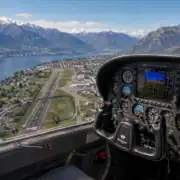
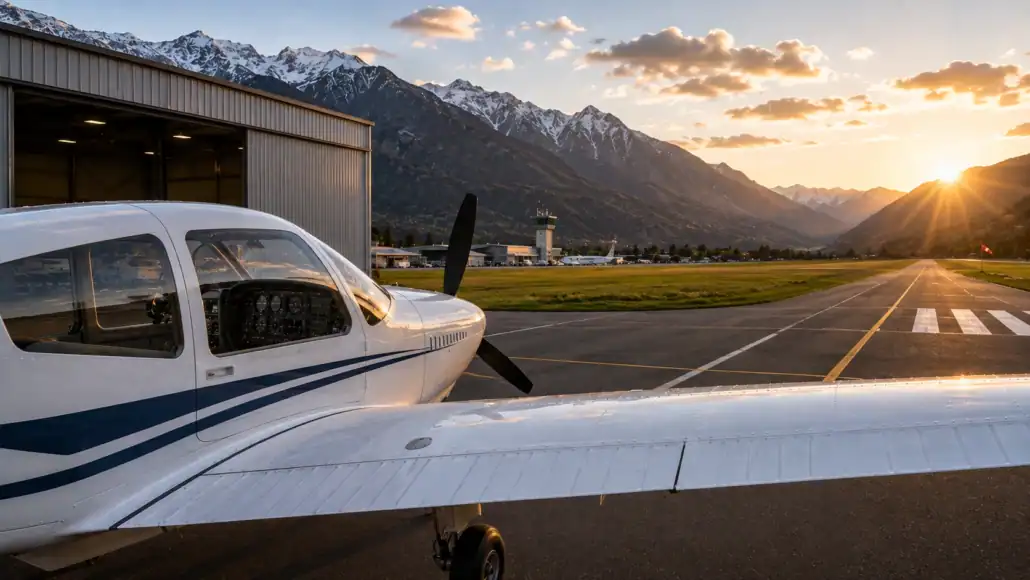
AELO Swiss Academy has been delivering EASA-approved pilot training since 1985 and holds ATO approval under reference CH.ATO.0311 as well as Diamond Authorized Flight Training Center status. Training is based at Locarno Airport in Switzerland, which records more than 320 flyable days per year. That figure has a direct practical consequence: practical flight phases advance faster when weather interruptions are infrequent, and training continuity is what allows the integrated syllabus to deliver what it’s designed to deliver.
Two-thirds of AELO’s instructors are active airline pilots, and many hold Captain rank at commercial carriers. That’s a structural point worth understanding clearly. Instructors who are currently flying the line know what airlines expect at assessment centres because they’re operating within those systems right now. The gap between what a training environment teaches and what an airline actually requires at an interview is where a lot of candidates get caught out. Instructors with current commercial experience don’t carry that gap.
The all-inclusive programme price covers tuition, flight hours, simulator sessions, examination fees, and accommodation. That structure removes the cost uncertainty that builds up in modular training, where each phase is priced separately and unexpected retests or rescheduling can push total expenditure well beyond initial projections.
The full detail of what the integrated training programme involves at each stage covers how the syllabus is structured from the first day of ground school through to airline preparation.
The Credit Transfer Question: When Does It Actually Apply?
Credit transfers are relevant for one specific group: pilots who already hold a valid licence issued by a non-EASA authority, such as the FAA, Transport Canada, CAAC, or CASA, and want to convert to an EASA licence to work in Europe.
The process involves validation by EASA, a difference evaluation, and in most cases some remaining examinations. The 13 ATPL theory exams aren’t automatically waived. Credit may apply depending on licence type, total logged hours, and any bilateral agreement between EASA and the issuing authority. Some will apply; some won’t.
The honest position is that credit transfers rarely deliver the clean shortcut candidates expect. A pilot coming from an FAA CPL with meaningful logged hours may be able to navigate the conversion process, but the scope of remaining requirements varies considerably depending on individual circumstances and the current state of any bilateral agreement. It isn’t fast, and it isn’t always predictable.
Any academy presenting a credit transfer as a reliable shortcut to a frozen ATPL is selling a best-case projection, not a standard outcome.
How the Three Paths Compare
| Factor | Integrated ATPL with AELO | Modular Route, self-managed | ATPL Credit Transfer |
|---|---|---|---|
| Who it’s designed for | Zero-experience candidates targeting airline careers | PPL holders building incrementally | Pilots converting existing non-EASA licences |
| Coordination responsibility | Managed entirely by the academy | Fully on the candidate | Shared between candidate and EASA authority |
| Phase continuity | Built into the syllabus under one ATO | Depends entirely on candidate decisions | Depends on credit assessment outcome |
| Syllabus consistency | Guaranteed under one approved organisation | Varies by provider selection | Varies by remaining requirements |
| Airline preparation | Embedded in the programme structure | Depends on the final provider’s scope | Depends on remaining training requirements |
| Cost visibility | All-inclusive fee covering tuition, flight hours, simulator, exams, and accommodation | Lower per phase, higher total uncertainty | Variable, depends on credit assessment outcome |
The table compares structures, not guarantees. What it shows is where coordination risk accumulates, and the modular route is where the most of it lives.
Who Should Think Carefully Before Choosing Integrated Training?
Integrated training isn’t the right answer for every situation. That’s worth stating directly.
If you already hold an EASA CPL with significant hours and only need to complete specific remaining requirements, a fully integrated programme would put you through phases you’ve already completed. That’s a poor fit.
If your goal is recreational flying rather than a commercial airline career, the integrated programme is built for a destination you’re not heading toward and a PPL would suit you better.
The integrated structure is continuous by design. The syllabus advances on a fixed schedule, which is exactly what prevents the drift and stalling that affects modular candidates. It’s also a genuine commitment. Candidates who aren’t prepared for sustained, consistent engagement across the full programme should understand that before they start. The structure that removes variables is the same structure that requires real follow-through.
For candidates starting from zero with a clear airline career objective, the integrated route removes more of the variables that cause training to fail or stall than any other available option. The path from zero hours to First Officer is dependent on the training structure supporting it from day one.
The 13 Theory Exams: What the Structure Changes
There are 13 ATPL theory exams. That number is the same regardless of which route you choose. The content is standardized by EASA. What’s not standardized is how you prepare for them.
In an integrated programme, theory instruction runs alongside flight training throughout the syllabus. It isn’t front-loaded into the first few months and then closed out. It’s woven through the programme, which means exam preparation is built into your regular schedule rather than something you manage in parallel while also coordinating simulator bookings and external school logistics.
First-time pass rates affect how your training record reads to an airline recruiter. A resit doesn’t end your candidacy, but EASA regulations limit the number of attempts per subject within a defined period, so a failed exam also affects your timeline. Within an integrated programme, additional support and resit scheduling are managed inside the existing structure. In the modular route, coordinating a resit with an external examination body adds logistical pressure at an already pressured moment.
For a broader picture of what commercial certification involves in practice, how commercial pilot certification works and where candidates commonly run into difficulty is worth reading before committing to a route.
The choice between training routes is ultimately a question about risk distribution. Integrated training concentrates the coordination responsibility with one organisation and removes it from you. That’s the structural argument for it, independent of any particular academy’s marketing. When you’re weighing that decision, what a structured pilot training pathway actually delivers gives you a concrete picture of what that means in practice.
FAQ
Can I transfer an FAA commercial pilot licence to an EASA ATPL?
Not directly. EASA operates a formal validation process for foreign licences, and the credit you receive depends on the specific licence held, your total logged hours, and the bilateral agreement between EASA and the issuing authority. In most cases you’ll still need to pass at least some of the 13 ATPL theory exams and complete a skills test and language proficiency assessment. It’s a genuine pathway, but it’s slower and more conditional than most candidates anticipate.
Do airlines treat integrated and modular-trained pilots differently at interviews?
Both routes produce EASA-licenced pilots, and airlines don’t formally exclude modular candidates. In practice, an integrated programme produces a consistent training record from a single ATO, and the airline preparation phase built into quality integrated programmes means graduates arrive at assessment centres with clearer operational awareness. The difference tends to show up in how candidates perform at those centres rather than on the face of the licence itself.
What’s included in AELO’s all-inclusive programme price?
The all-inclusive fee covers tuition, flight hours, simulator sessions, examination fees, and accommodation and much more. That gives candidates clear cost visibility from the start and removes the uncertainty that accumulates in modular training, where unexpected retests or scheduling changes can push total costs well above initial estimates.
What do I need to qualify for integrated ATPL training?
EASA integrated ATPL programmes generally require candidates to meet minimum age requirements, hold a valid Class 1 Medical Certificate, and demonstrate sufficient English language proficiency. Academic requirements are typically a secondary school diploma or equivalent. You should confirm specific entry criteria directly with AELO Swiss Academy, as requirements vary by programme.
How are the 13 ATPL theory exams distributed through integrated training?
In an integrated programme, theory instruction is woven through the syllabus rather than concentrated into an early standalone phase. Exam preparation runs alongside practical training, embedded in your regular schedule rather than managed as a separate, parallel undertaking. The sequencing is handled by the academy.
What happens if I fail a theory exam during integrated training?
Failing an exam doesn’t end your training, but it does affect your timeline. EASA regulations allow three attempts per subject within a defined period. Within an integrated programme, additional support and resit scheduling are handled inside the existing structure. That’s a meaningful practical difference from the modular route, where coordinating a resit independently adds logistical complexity at an already pressured moment.
Is Switzerland a practical location for pilot training?
It has specific, concrete advantages. Locarno Airport records more than 320 flyable days per year, which means practical flight phases progress with fewer weather-related interruptions than many northern European locations. EASA licences issued in Switzerland carry full recognition throughout all EASA member states. AELO Swiss Academy’s graduates have gone on to fly with airlines including Swiss, Lufthansa, Ryanair, Emirates, Etihad, and others across the network.
AELO Swiss Academy Training Team is a group of EASA-approved commercial aviation professionals delivering integrated pilot training in Switzerland under ATO approval CH.ATO.0311. The team includes active airline captains and commercial pilots who bring current line experience into the training environment. Established in 1985, AELO Swiss Academy has trained pilots who now fly with airlines across the global network.