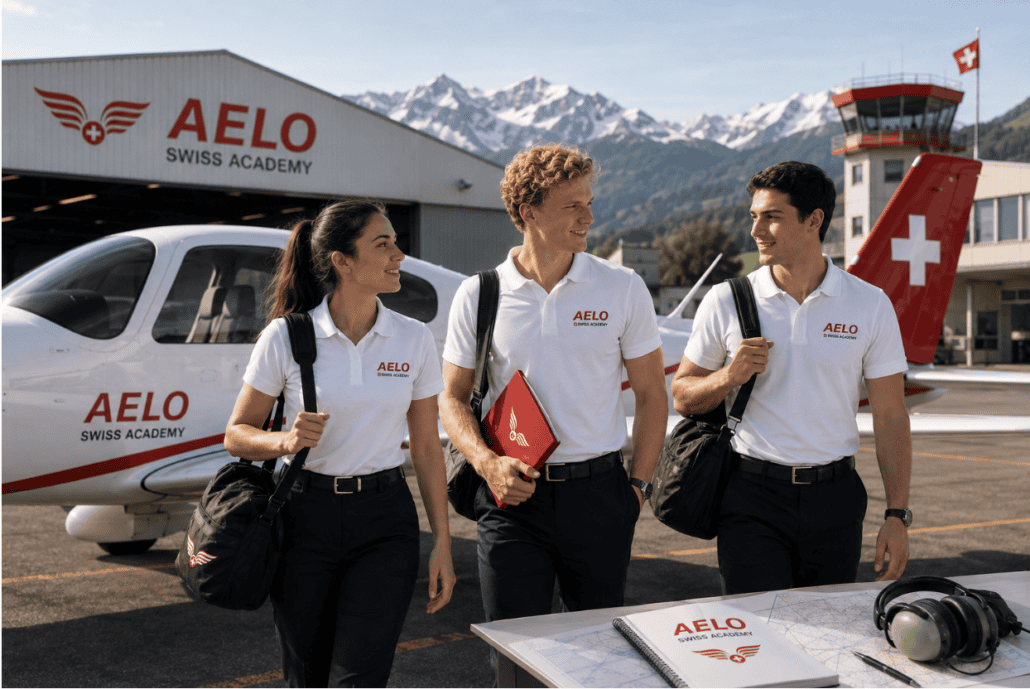
From Zero Hours to First Officer: What a Structured Pilot Training Pathway Actually Delivers
Becoming a commercial airline pilot is a defined sequence of certifications, not an open-ended exploration. Under EASA’s integrated ATPL framework, a candidate with zero flight experience can reach frozen ATPL qualification in 18 months. Whether that qualification supports a smooth transition into professional aviation depends heavily on the training pathway chosen, not simply the license itself.
Key Takeaways
- Fragmented, multi-school training routes can create delays and continuity challenges that may slow progress toward commercial employment.
- Under EASA’s Part-FCL regulatory framework, theoretical knowledge credits carry a 36-month validity window; modular candidates who miss this threshold face re-examination and compounding delays.
- All-inclusive fixed pricing helps reduce the risk of mid-program budget shortfalls that routinely derail modular candidates who consistently underestimate total cumulative cost at the outset.
Why Does Airline Pilot Training Feel So Hard to Navigate?
The surface answer most candidates give is cost. The structural answer is opacity.
From the first day of research, you’re confronted with a landscape of competing certifications, ATPL, CPL, MPL, IR, MCC, presented in isolation by schools that have no incentive to explain how they sequence into an actual airline career. Regulators publish requirements in technical language built for compliance, not decision-making. Airlines list minimum hours without specifying which training routes their recruitment teams actually favour.
The result is a motivated, financially prepared candidate who can’t make a confident decision.
That’s a design problem, not a knowledge gap. Aviation training was historically built around regulatory compliance. Schools teach certification minimums. Career outcomes get treated as the airline’s problem, not the academy’s. Most candidates never fully model that distinction until they’re holding a frozen ATPL with no clear path to a cockpit.
What’s the Real Difference Between Integrated and Modular ATPL Training?
This is where most candidates lose between one and three years of their career. Often more of their budget than they planned.
Modular training is the piecemeal route: PPL first, then IR, then CPL, then MCC, completed across different schools and sometimes different regulatory environments. It appears cheaper at the outset. For most zero-hours candidates targeting a commercial career, it isn’t.
Integrated ATPL training is a defined framework under EASA regulation. Every certification is completed in sequence within a single ATO-approved program, with a fixed timeline and a known endpoint. EASA’s Part-FCL regulatory structure for integrated ATPL pathways requires all theoretical knowledge and flight training to be delivered under unified supervision. One accountability chain, one training record, one institution responsible for the outcome.
Here’s a claim worth stating plainly: choosing modular training primarily on upfront cost can sometimes lead to higher overall costs and longer timelines than candidates initially expect. EASA’s Part-FCL Appendix 1 defines the theoretical knowledge examination requirements for ATPL candidates, and those credits carry a 36-month validity window. If that window expires before the CPL skill test is completed. A common occurrence in modular routes where candidates balance training against employment. Re-examination is mandatory. Simulator hours get purchased separately at market rates. MCC courses get bolted on at the end. Candidates who’ve transferred mid-route from modular to integrated programs consistently report losing between six and fourteen months of progress and paying for overlapping certifications twice.
A candidate who completes the full modular journey often arrives at airline assessments with a patchwork training record, spends a comparable total, and takes three to five years to reach a qualification that an integrated pathway delivers in 18 months.
What Does a Well-Structured ATPL Program Actually Cover?
Students complete integrated flight training alongside their theoretical studies, progressing through the various stages of training required under the Integrated ATPL pathway. This includes flight instruction, instrument training, multi-engine training, commercial pilot preparation, and APS MCC training within a coordinated program structure.
The program runs at AELO’s base in Locarno, Switzerland. There’s no requirement to self-coordinate across disconnected locations or manage your own logistical handoffs between schools.
All-inclusive pricing at €104,950 covers aircraft, simulator hours, examination fees, and accommodation coordination. That structure exists to remove the mid-program budget failures that derail modular candidates who started with a different number in mind and couldn’t close the gap.
AELO Swiss Academy has operated since 1985 under ATO approval CH.ATO.0311 and holds Diamond Authorized Flight Training Center status. These credentials reflect the academy’s long-standing commitment to training quality, regulatory compliance, and professional aviation standards.
The Pathway Decision: What You’re Actually Choosing Between
The comparison that matters isn’t simply between individual training providers. It’s between following a structured training pathway and managing a fragmented route across multiple providers.
| Decision Path | Typical Duration | Cost Profile | Accountability |
| Integrated ATPL with AELO Swiss Academy | 18 months | €104,950 fixed, all-inclusive | Single ATO (CH.ATO.0311), full program |
| Modular ATPL across multiple schools | 3-5 years | Variable; consistently exceeds initial estimate | Fragmented; no single accountable provider |
| Waiting or extended self-directed research | Indefinite | Zero upfront; full career income foregone | None |
The cost of inaction isn’t zero. Every month spent in extended research, or inside a fragmented training route, is a month of airline seniority not accumulating. Seniority determines schedule, aircraft type, and salary progression across the full arc of a commercial career. The downstream financial effect of a two-year delay in reaching a First Officer seat is substantial. And most candidates never model it until after the fact.
What Do Airlines Actually Look For When They Hire New First Officers?
Airlines don’t hire hours. They hire capability profiles.
The standard assessment framework across major European carriers evaluates simulator performance under operational stress, systems knowledge depth, ICAO Level 4 English proficiency as a minimum, Class 1 medical clearance, and demonstrated crew resource management competency. That last element, CRM, is where structured APS MCC training within an integrated program creates a measurable difference that standalone bolt-on MCC courses don’t replicate.
The ICAO CRM competency framework, as defined in ICAO Doc 9868 PANS-TRG, specifies behavioral markers that airline assessment evaluators are trained to identify. Candidates who’ve completed structured multi-crew training within an integrated program have those behaviors embedded through repetition rather than recently acquired. The distinction shows in the assessment room.
The logbook is the baseline requirement. It’s not the differentiator.
Is Integrated ATPL Training the Right Choice for Every Aspiring Pilot?
It’s worth being direct here: it isn’t.
If your goal is recreational flying with no commercial career target, the investment doesn’t align with the outcome. That’s not a fit problem with any particular academy. It’s a mismatch between the program and the objective.
If you can’t commit to continuous, full-time training across an 18-month block, the integrated program structure creates friction rather than momentum. This pathway is designed for candidates who are fully committed to the airline career. Treating it as a part-time or interruptible process extends timelines and compounds costs in ways that work against the candidate, not the institution.
One limitation no structured program resolves: the candidate who hasn’t settled their own uncertainty about whether an airline career is what they actually want. Training costs are recoverable across a thirty-year career. Time spent inside the wrong program, or carrying unresolved indecision forward, isn’t. That’s not a reason to rush a poor decision. It’s a reason to resolve the uncertainty through a direct consultation before committing, not through months of additional independent research.
FAQ
How long does it realistically take to go from zero experience to flying for an airline?
AELO Swiss Academy’s integrated ATPL pathway is designed around an 18-month training timeline. The time required to progress from graduation into airline employment varies based on individual circumstances, hiring conditions, and airline requirements.
Is investing over €100,000 in pilot training financially justified?
The value of pilot training depends on far more than obtaining a license. Students should consider training quality, regulatory approvals, professional preparation, and how well a program aligns with their long-term career goals.
What’s the difference between a frozen ATPL and a full ATPL?
A frozen ATPL is held by pilots who’ve passed all 13 ATPL theoretical knowledge examinations and hold a CPL with instrument rating, but haven’t yet accumulated the 1,500 flight hours required to activate the full ATPL under EASA Part-FCL. It’s the standard qualification for airline First Officers entering line flying. The hours accumulate during operational service; the ATPL activates once the threshold is met.
Does it matter that AELO Swiss Academy trains across Switzerland and Italy?
For pilots training within EASA-aligned regulatory environments, certifications are recognised across the European Common Aviation Area. Switzerland operates under bilateral agreements aligned with EASA standards. What matters more than geography is the ATO’s current approval status, the quality of the training fleet, and whether the academy provides training that aligns with current industry standards and expectations. AELO’s CH.ATO.0311 approval, training environment, and long-standing industry experience help address those considerations.
Is a type rating included in the program cost?
Type ratings are generally not included in integrated ATPL programs and are typically completed later based on airline requirements and career direction.
What should candidates ask any academy before enrolling?
Ask about training structure, regulatory approvals, instructor experience, program inclusions, and how the academy supports students throughout their training journey.
What does EASA ATO approval actually mean in practice?
An EASA Approved Training Organization certificate, such as AELO’s CH.ATO.0311, means the academy has been formally assessed and approved by a national aviation authority to deliver structured flight training under EASA’s Part-ORA regulatory framework. It covers instructor qualification standards, aircraft airworthiness, training record management, and quality assurance systems. When that approval covers the full integrated program under a single ATO, one regulatory entity is accountable for the entire training sequence. Not a patchwork of approvals assembled across unconnected providers.
If you’re still working out whether an integrated pathway fits your timeline, budget, and career target, that’s a question worth resolving through a direct program consultation. AELO Swiss Academy works with candidates at exactly this decision point to assess fit before any commitment is made.
Contact AELO Swiss Academy to request a program assessment.
References
European Union Aviation Safety Agency (EASA). Part-FCL. Licensing of Flight Crew. Regulatory framework governing ATPL, CPL, MPL, integrated training programs, knowledge credit validity, and ATO certification standards across EASA member states and aligned jurisdictions.
International Civil Aviation Organization (ICAO). Doc 9868 PANS-TRG. Procedures for Air Navigation Services. Training. CRM competency framework and multi-crew coordination standards referenced in airline assessment practice.
Boeing Company. Pilot and Technician Outlook. Global aviation workforce demand projections and regional pilot supply analysis, referenced for context on airline hiring conditions.